
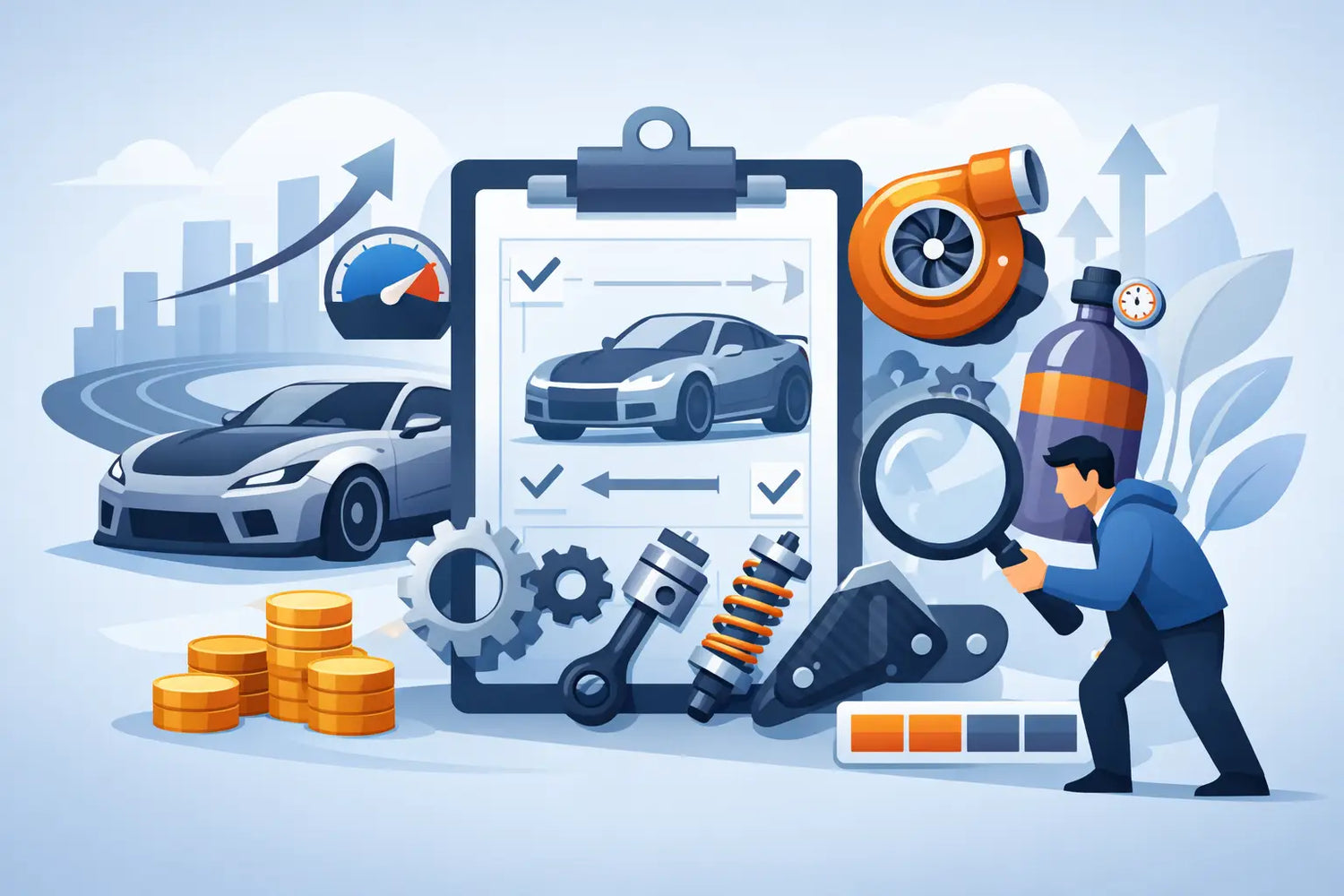
A higher PP number looks good in the garage, but it does not automatically make your car faster where it counts. If you are searching for how to improve CSR2 PP, the real move is learning when to raise Performance Points, when to protect EVO, and when a lower-PP tune is actually the stronger race build.
CSR2 rewards efficient builds, not blindly maxed upgrade screens. Throwing every Stage 6 part and fusion you own onto the wrong car can drain your cash, keys, and inventory for a result that loses to a properly tuned rival. Build with a race target in mind first, then make PP work for that target.
How to Improve CSR2 PP the Smart Way
PP, short for Performance Points, rises as you install upgrades across engine, turbo, intake, nitrous, body, tires, and transmission. Higher-stage upgrades usually add more PP. Stage 6 parts can add a major jump, although the size of that jump varies by car and by part.
That sounds simple, but PP only tells part of the story. Your actual competitiveness comes from the combination of PP and EVO points, plus the car's real quarter-mile or half-mile time. A car with slightly less PP and much better EVO can beat a higher-PP car all day.
Start by deciding what the car is for. A campaign car, a Tempest lock-in, a live-racing build, a crew milestone car, and a showdown car should not all be upgraded the same way. For unrestricted events, build toward the best final time. For PP-capped or lobby-sensitive racing, tune for the strongest performance inside the limit.
Install upgrades in stages, then test
Do not spend millions in cash just because an upgrade is available. Install a level, check the PP change, run the dyno, and compare the result. Repeat through Stage 5 before committing rare Stage 6 parts.
This is especially useful when you have several cars in the same tier. Some cars become monsters with a basic Stage 5 setup and the right fusions. Others need specific Stage 6 parts to become worthwhile. The difference is huge when you are trying to protect your gold keys and avoid building cars you will abandon next week.
A good rule: fully upgrade the car only if it has a clear event, race target, or long-term garage role. Otherwise, stop when it reaches the performance you need.
Tune for EVO, Not Just PP
Tuning is where many racers leave time on the table. You can change final drive, tire pressure, and nitrous settings to move PP and EVO around. The best dyno number is useful, but it is not always the best launch and shift setup in a real race.
Begin with all available upgrades installed, then use the dyno as a baseline. Adjust one setting at a time and watch both PP and EVO. A final-drive adjustment may lower PP while adding EVO. That can be exactly what you want if the car launches better, stays in the power band, or fits a target lobby.
For a quick starting point, tune nitrous for the part of the run where the car loses pace. Short, powerful nitrous can help a car that needs a hard launch. Longer nitrous may suit a car that carries speed late in the race. Lower tire pressure generally helps grip, while higher pressure can improve rolling resistance, but every car reacts differently.
Then test the actual run. If the dyno says your car runs 8.2 seconds but you consistently run 8.4, the tune or shift pattern needs work. A stable 8.25 run is more valuable than a flashy dyno that only works once in ten attempts.
Use a repeatable test routine
Use the same fuel level and test several runs before you judge a change. Launch RPM, first shift, nitrous timing, and whether you use perfect or early shifts can change the result. Record your best repeatable time, not one lucky pass.
This matters most in live racing. A car that dynos at 9.0 but beats its dyno by a few tenths can face very different opponents from a car that runs exactly on dyno. Do not assume a high PP number gives you an easier path to wins. Your actual run time and lobby behavior matter more.
Fusion Parts Raise PP Only When They Help
Fusion parts improve the effect of installed upgrades. They can add PP, EVO, or both, depending on the part and the slot. Rare and epic fusions are powerful, but they are also easy to waste on a car you will never race again.
Prioritize fusions on upgrades that affect the car's weak area. If traction is the problem, tire and transmission fusions may matter more than stacking every available intake fusion. If the car runs out of pull at the top end, engine, turbo, and nitrous upgrades can change the finish more than a small PP gain elsewhere.
When you are short on fusions, focus on one serious car per tier instead of spreading them across your whole garage. That gives you a reliable campaign and event option rather than six half-built cars that cannot finish a difficult cup.
Be careful with donor cars. Stripping a duplicate can produce useful parts, but only strip cars you are certain you do not need for a future manufacturer event, Elite Customs collection, or lock-in. A quick fusion today can become an expensive regret when the next event arrives.
Stage 6 Parts: Fit the Right Ones First
Stage 6 parts are not equal. On one car, a transmission Stage 6 may be the game-changer. On another, the body or turbo part can cut far more time. The PP increase alone does not tell you which one is strongest.
If you have a choice, fit the Stage 6 parts that make the largest real-time improvement. Check the dyno after each installation, then test a run. Keep notes on which parts create the best gains for your car. This is far better than chasing the largest visible PP jump.
Do not force a Stage 6 part onto a car just because it is sitting in inventory. It can make sense to hold it for a future build, especially if your current car already clears the races you need. CSR2 progression is a resource game. Smart patience beats panic spending.
Build Around Race Requirements
A higher PP build can be the correct call for a ladder race, Prestige Cup, or showdown where maximum raw performance is the target. For those situations, fully upgraded parts, correct fusions, Stage 6 coverage, and a tested tune are the route to faster times.
But if an event has a PP ceiling, do the opposite. Install only enough upgrades to reach the cap, then tune for EVO and driveability. Sometimes a lower-stage transmission or tire setup lets you keep the car under the number while producing a much stronger run.
For Tempest, never assume the newest or highest-PP car is your best lock-in. Use a car with enough headroom to beat the required times after upgrades and fusions. Once a car is locked, you cannot casually replace it, so check its potential before committing.
Stop Burning Resources on Bad PP Chases
The fastest way to stall your garage is buying crates, spending gold, and fitting rare parts to solve a problem that tuning would fix. Before you invest, ask three questions: Does this car have an upcoming use? Is it missing a specific part that will materially improve its time? Can my current tune and shift pattern already do the job?
If the answer is no, save the resources. Cash is for upgrades, gold is for strategic purchases and race retries, and keys are for cars that matter. That discipline builds a stronger garage than chasing every new pull.
If the grind is the thing holding back your build, Sharkmods offers CSR2 resources, maxed cars, and custom MAX or STOCK builds delivered server-side to an existing account, with no mod APK, root, or jailbreak. Choose the exact gap you need to close rather than loading up on resources without a plan.
The PP Number Is a Tool, Not the Finish Line
Treat PP as a build control, not a trophy. Raise it when more upgrade level helps you meet a race target. Pull it back when a lower-PP, higher-EVO setup runs faster or keeps you inside a cap. Test every major change, save your rare parts for proven cars, and build for the races you actually want to win.
Your garage gets dangerous when every upgrade has a reason behind it.


Leave a comment
This site is protected by hCaptcha and the hCaptcha Privacy Policy and Terms of Service apply.